At Devine Interventions, we understand the profound impact attachment styles have on our relationships and overall well-being.
Attachment styles shape how we connect with others, influencing our emotional responses and behavioral patterns in intimate relationships.
This blog post will guide you through understanding, recognizing, and improving your attachment style, empowering you to take control of your relational patterns.
What Are Attachment Styles?
The Four Main Attachment Styles
Attachment styles shape how we connect with others in relationships. They develop early in life and influence our adult interactions. At Devine Interventions, we observe how these patterns affect our clients’ lives daily.
- Secure Attachment: People with this style trust easily and form healthy relationships. They feel comfortable with intimacy and independence.
- Anxious Attachment: These individuals often fear abandonment. They seek constant reassurance in relationships.
- Avoidant Attachment: People with this style maintain emotional distance. They prioritize independence over intimacy.
- Disorganized Attachment: This style combines anxious and avoidant behaviors. It often stems from childhood trauma or inconsistent caregiving.

Childhood Roots of Attachment
Our early experiences with caregivers lay the foundation for future relationships. Consistent, loving care typically leads to secure attachment. Unpredictable or neglectful care can result in insecure styles.
Attachment theory suggests that sensitive caregiving in the earliest months and years of life leads to the establishment of a ‘secure’ caregiver-child attachment.
Adult Relationship Impacts
Attachment styles don’t just affect childhood. They shape our adult relationships too. For example:
- Securely attached adults tend to have longer, more satisfying relationships.
- Those with anxious attachment might struggle with jealousy or fear of abandonment.
- Avoidant individuals often have difficulty committing or expressing emotions.
- People with disorganized attachment may experience chaotic relationship patterns.
Research has shown that attachment styles can predict relationship satisfaction and longevity.
Changing Your Attachment Style
The good news? You can change your attachment style. With self-awareness and effort, you can develop a more secure style. Professional help (like the services we offer at Devine Interventions) can make a significant difference in this process.
Our therapists use evidence-based techniques to help you understand and improve your attachment style. We’ve witnessed clients transform their relationships and overall well-being through this work.
Your attachment style doesn’t define you. It serves as a starting point for growth and healing. If you struggle with relationship patterns, reach out to us at Devine Interventions. We’re here to help you build healthier, more fulfilling connections.
Recognizing Your Attachment Style
Now that we’ve explored the different attachment styles, let’s move on to how you can identify your own attachment style. Understanding your personal attachment patterns is the first step towards creating positive change in your relationships.
How to Identify Your Attachment Style
Recognizing your attachment style is a key step towards healthier relationships. At Devine Interventions, we help clients understand their attachment patterns and work towards positive change. Here’s how you can start to identify your own attachment style:
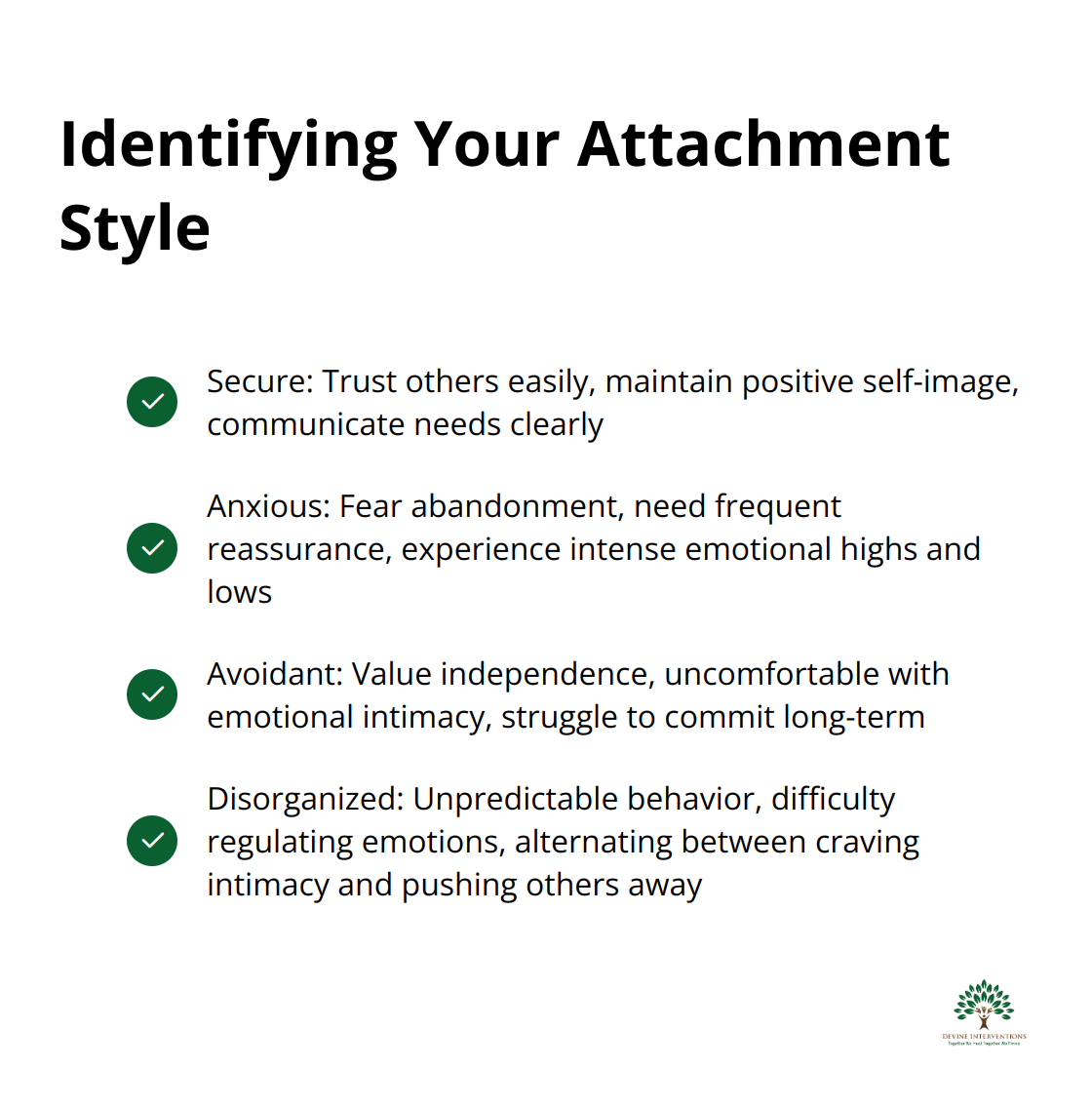
Signs of Secure Attachment
People with secure attachment typically have positive views of themselves and others. They balance intimacy and independence well. If you have a secure attachment style, you likely:
- Trust others easily and feel comfortable depending on them
- Maintain a positive self-image and high self-esteem
- Communicate your needs clearly and directly
- Seek support when needed (and offer support to others)
- Recover quickly from relationship setbacks
Indicators of Anxious Attachment
Those with anxious attachment often worry about their relationships and seek constant reassurance. If this sounds like you, you might:
- Fear abandonment and worry excessively about your partner’s feelings
- Need frequent contact and reassurance in relationships
- Feel insecure about your partner’s love and commitment
- Become overly dependent in relationships
- Experience intense emotional highs and lows
Characteristics of Avoidant Attachment
Avoidant attachment prioritizes independence over closeness. You might have an avoidant attachment style if you:
- Value your independence above all else
- Feel uncomfortable with emotional intimacy
- Have difficulty trusting or depending on others
- Tend to minimize or dismiss your own (or others’) feelings
- Struggle to commit to long-term relationships
Hallmarks of Disorganized Attachment
Disorganized attachment is the most complex style, often resulting from trauma or inconsistent caregiving. Signs include:
- Unpredictable or erratic behavior in relationships
- Difficulty regulating emotions
- Alternating between craving intimacy and pushing others away
- Struggling with trust and fear in relationships
- Experiencing high levels of anxiety in close relationships
These descriptions serve as general guidelines. Many people don’t fit neatly into one category. If you’re unsure about your attachment style (or want to work on developing a more secure attachment), professional help can be invaluable. Our experienced therapists at Devine Interventions can help you understand your attachment style and develop healthier relationship patterns.
Now that you’ve gained insight into identifying attachment styles, let’s explore effective strategies for improving your attachment style and building more secure relationships in the next section.
How to Improve Your Attachment Style
Embrace Self-Reflection
Start a relationship journal. Write down your thoughts, feelings, and reactions in various relationship situations. This practice helps you identify patterns and triggers. Many clients find this simple act eye-opening.
Try the “5-minute check-in” technique. Set aside five minutes each day to reflect on your emotional state and recent interactions. This brief pause can dramatically increase your self-awareness over time.
Master Effective Communication
Clear, honest communication forms the cornerstone of secure relationships. Practice using “I” statements to express your needs and feelings without blaming others. For example, instead of saying “You never listen to me,” try “I feel unheard when we talk.”
Implement the “speaker-listener” technique in your conversations. One person speaks while the other listens actively, then summarizes what they heard before responding. This method has helped countless couples improve their communication (as observed in therapy sessions).
Develop Emotional Regulation Skills
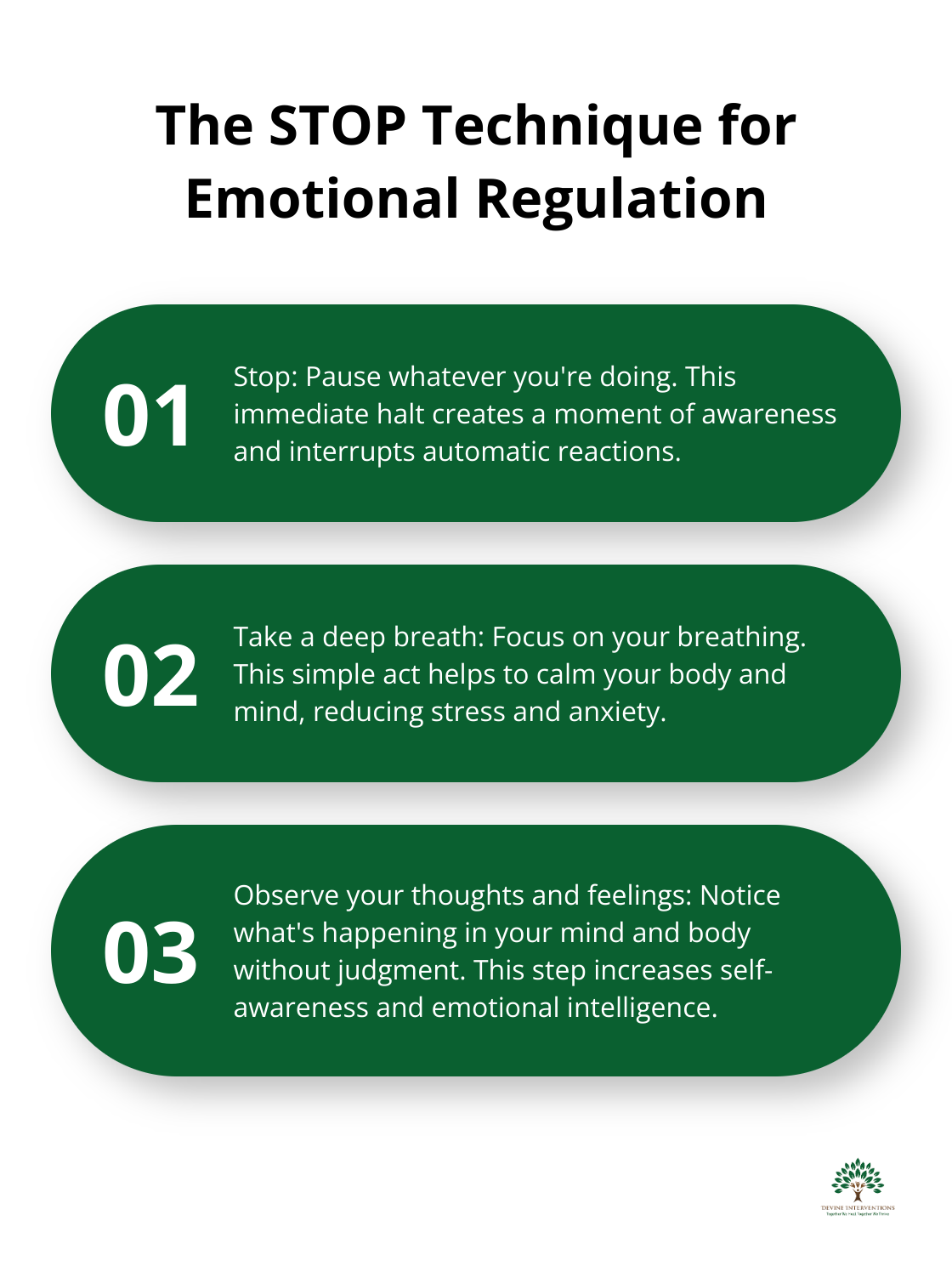
Learn to manage your emotions to improve your attachment style. Try the “STOP” technique:
S – Stop what you’re doingT – Take a deep breathO – Observe your thoughts and feelingsP – Proceed mindfully
This simple method can help you pause and respond thoughtfully rather than react impulsively in emotional situations.
Another effective technique is “grounding.” When you feel overwhelmed, focus on your five senses. Name five things you can see, four things you can touch, three things you can hear, two things you can smell, and one thing you can taste. This exercise brings you back to the present moment, reducing anxiety and promoting emotional stability.
Seek Professional Guidance
While self-help techniques provide value, professional support can accelerate your progress. Therapists who specialize in attachment-focused therapy use evidence-based approaches like Emotionally Focused Therapy (EFT) to help clients understand and modify their attachment patterns.
A 2019 meta-analysis highlighted that EFT significantly enhances relationship satisfaction for couples, helping them develop more secure attachment bonds.
Practice Mindfulness and Self-Compassion
Incorporate mindfulness exercises into your daily routine. This can help you become more aware of your thoughts and emotions, allowing you to respond more consciously in relationships. Try a simple breathing exercise: focus on your breath for 5 minutes each day, gently bringing your attention back whenever your mind wanders.
Cultivate self-compassion. Treat yourself with the same kindness you would offer a good friend. This can help reduce anxiety and increase your capacity for healthy relationships. Self-compassion has been linked to more secure attachment styles in research studies.
Final Thoughts
Understanding attachment styles empowers you to build healthier relationships. You can transform your attachment patterns through self-awareness, dedication, and professional support. At Devine Interventions, we offer specialized therapy to help you navigate this journey of personal growth.
Our experienced team uses evidence-based approaches to address root causes, not just symptoms. We provide tailored services, from individual therapy to intensive outpatient programs, to meet your unique needs (including those related to attachment styles).
You don’t have to face relationship challenges alone. With the right tools and support, you can develop secure attachment patterns and improve your overall well-being. Take the first step towards transforming your relationships by reaching out to Devine Interventions today.